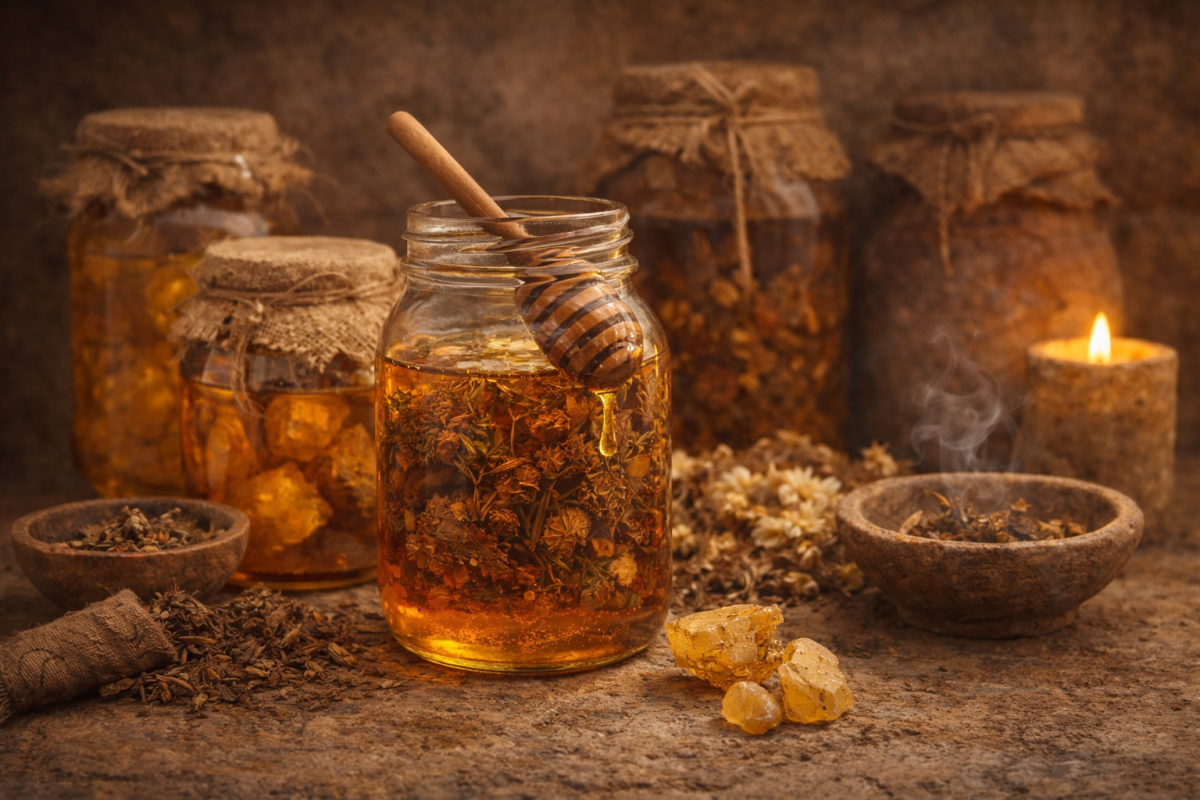
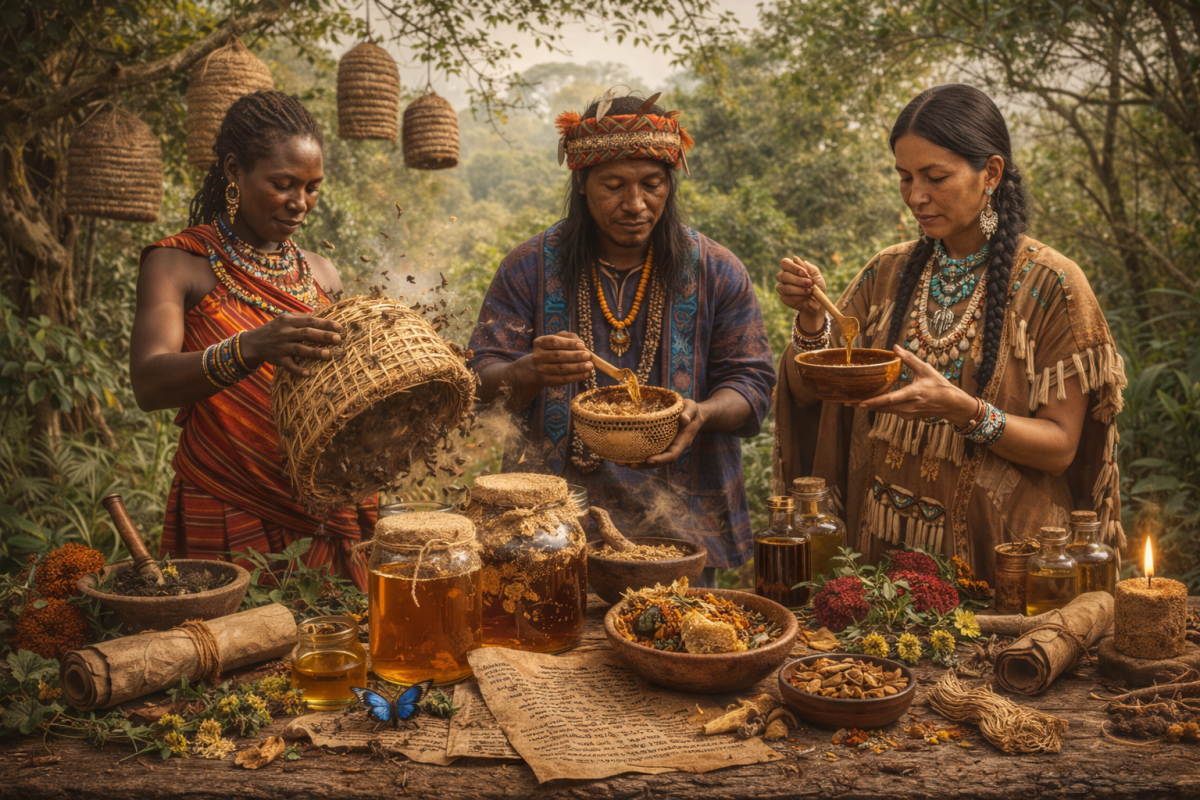
Beekeeping starts long before modern farming, chemistry, or medical writing. Humans built a relationship with bees that shaped food, healing habits, and ritual life. Beekeeping wasn’t one clean invention. It grew as separate discoveries, wherever people found wild honey and noticed what made it different. Honey stayed stable. It tasted sweet. It helped slow rot. This history isn’t only about food. It’s about early people learning biology by contact. By need. By survival.
Early Evidence of Human–Bee Interaction
Now we move from idea to evidence.
The earliest known evidence of honey collection goes back more than 8,000 years. It appears in rock art in what is now Spain. The images show people climbing, or hanging from ropes, to take honey from wild hives. That alone says a lot. Honey mattered. The risk was worth it. As groups shifted from nomadic life to farming, bee contact changed too. People got more deliberate. They didn’t only raid wild nests. They started guiding bees into places they could return to. Predictable spots. Repeat access.
Beekeeping in Ancient Civilizations
This is where beekeeping turns into systems.
Egypt
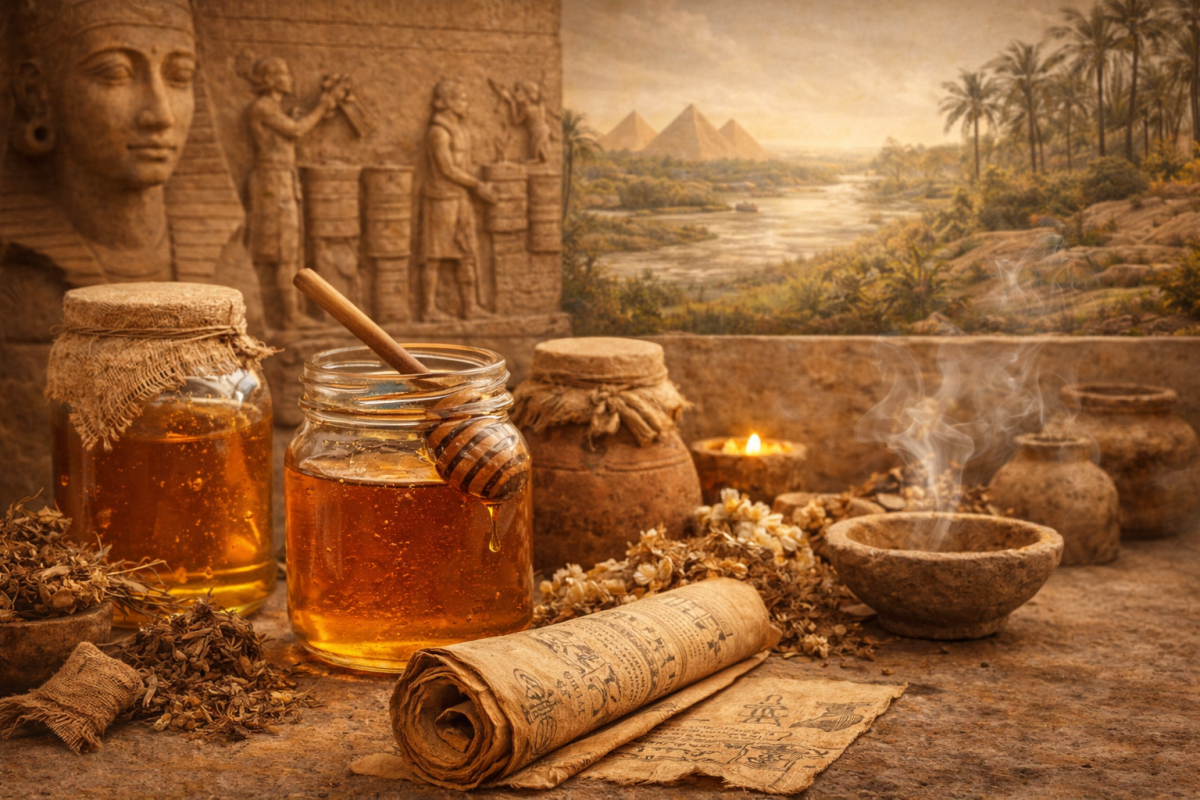
Egypt gives us some of the clearest early records. Written records suggest people understood that honey resisted spoilage and could be put on wounds. They did not have modern terms for acidity, osmotic pressure, or enzymes. Still, they saw the pattern and used it.
Reliefs from around 2400 BCE show organized beekeeping. Cylindrical clay hives appear stacked horizontally. Beekeepers managed colonies along the Nile. Honey worked as food, but also as part of offerings, embalming practices, and early preparations.
Greece and Rome
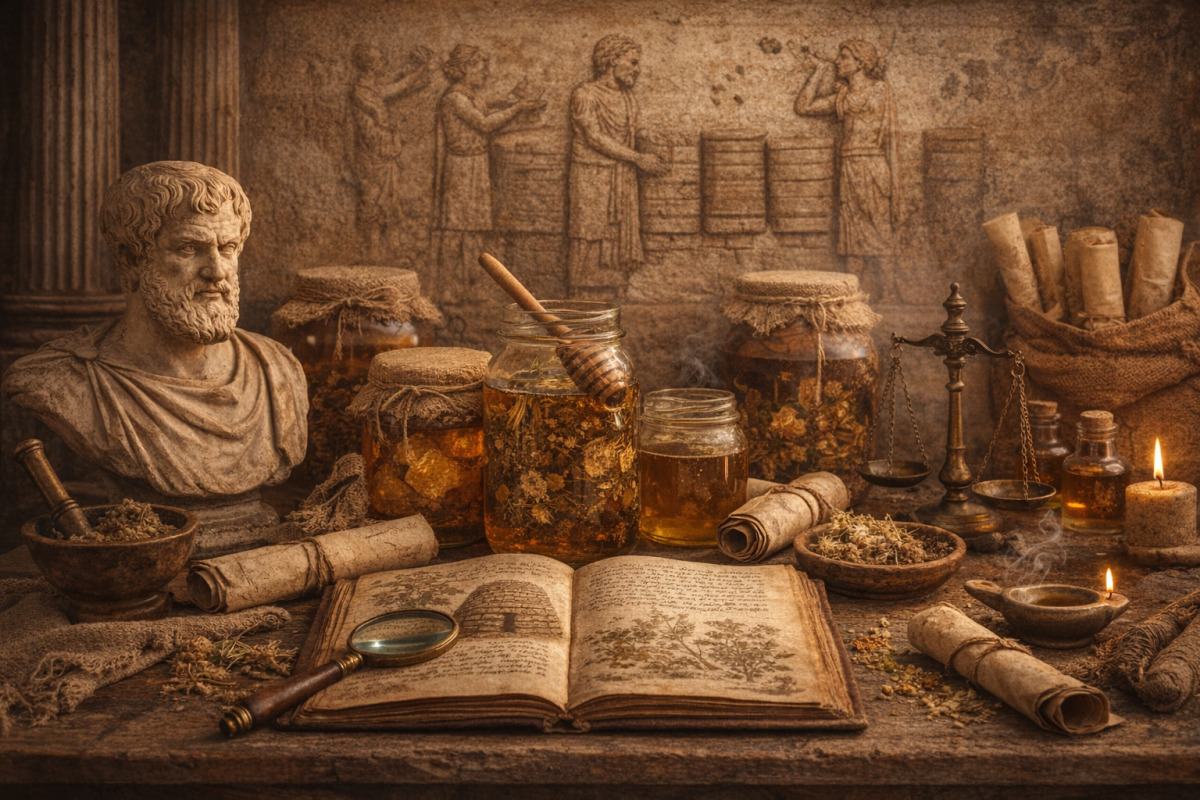
In the broader Mediterranean, the same patterns keep showing up. Written records suggest honey was valued for resisting spoilage and for use on wounds. People leaned on what held up over time. Honey wasn’t treated as a single-purpose ingredient. It moved between daily food use and more formal preparation, depending on the setting.
Honey as Preservation and Stability
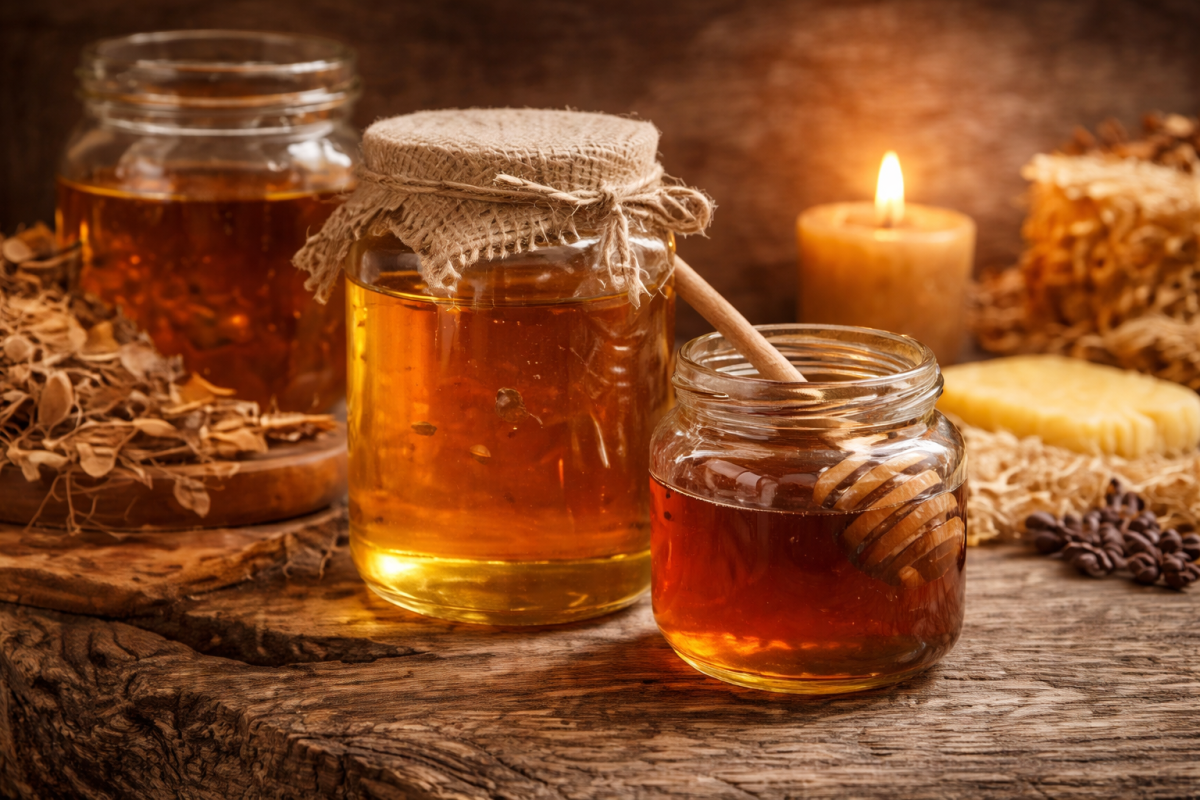
Here’s the practical reason honey kept winning. One of honey’s biggest advantages was how well it held up over time. Unlike fruit, grains, or meats, honey resisted fermentation and microbial growth when stored well. In a world without food preservation was a matter of survival, not convenience.
Across cultures, people used honey to preserve plant materials, herbs, and resins. They didn’t need chemistry to do it. Repetition taught them that honey slowed decay. That pattern set the stage for honey as both a carrier and a preservative in botanical preparations.
Indigenous and Traditional Practices
Now widen the lens beyond the classical world.
Beekeeping and honey use developed on their own in Africa, Asia, and the Americas. Indigenous communities often tied honey to larger ecological knowledge. Seasons. Bloom cycles. Pollinator behavior. Land care. Long before “environmental science” had a name.
In many traditions, honey sat between food and medicine. Not as a drug. More as a steady substance linked to balance, recovery, and resilience.
From Observation to Science
This is the hinge between past practice and modern explanation. What connects these histories isn’t one shared theory. It’s a shared method. People watched honey behave unlike other foods. It preserved without obvious decay. It helped without obvious harm. It gave energy and still kept.
Later, modern science explained these effects with ideas like low water activity, acidity, enzyme-driven hydrogen peroxide, and antioxidant compounds. For most of human history, none of that language existed. Honey proved itself through use and consistent outcomes. That legacy sets up how we look at honey today. Not only as a sweetener, but as a biologically active substance shaped by plants, place, and human care.
Why Beekeeping Still Matters
To close this out, we connect history to the present.
Knowing the history of beekeeping helps explain why honey still shows up in modern talks about food, biology, and preservation. Beekeeping is one of humanity’s earliest long-term partnerships with another species. And honey remains one of the few foods made mostly through biology, not heavy industry.
Sources & References
Medicinal Uses and Health Benefits of Honey: An Overview
Sampath Kumar, K. P., et al. | 2010
A peer-reviewed overview examining honey’s nutritional composition, antimicrobial properties, antioxidant activity, and traditional medicinal applications, with discussion of modern clinical and laboratory research.
A scientific review summarizing honey’s antimicrobial, antioxidant, and wound-healing properties, with emphasis on biological mechanisms rather than traditional claims.
A peer-reviewed clinical review examining honey’s biochemical properties and its documented antioxidant, antimicrobial, anti-inflammatory, and therapeutic effects across multiple body systems.
Antioxidants in Honey: Composition and Biological Activity
Various contributors (Antioxidants Journal) | 2014
A scientific review examining the antioxidant compounds in honey, including polyphenols and flavonoids, and their role in reducing oxidative stress and supporting cellular health.