Cannabis is one of humanity’s oldest cultivated plants. Its story runs across continents, cultures, and daily life. Long before today’s legal and science debates, people treated it as a useful plant. Fiber. Food. Ritual. Traditional prep.
Like honey, cannabis entered human life through observation. People noticed what it did. They adapted it to local needs. Then they passed that knowledge along through practice, not textbooks.
Early Cultivation and Archaeological Evidence
The record begins in the ground, not in writing.
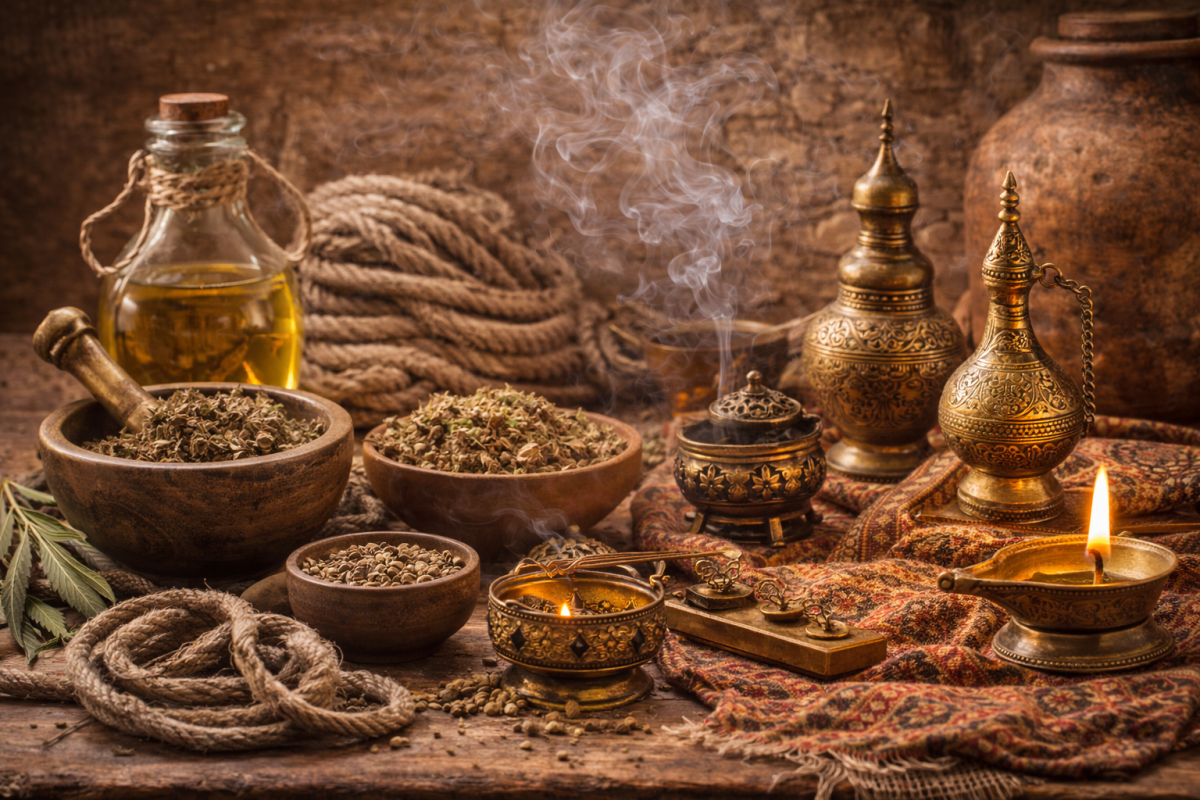
Archaeology suggests cannabis cultivation goes back at least 10,000 years. Early traces appear in Central and East Asia. Researchers have found hemp fibers in ancient pottery and textiles. That points to an early focus on strength and utility, not intoxication. Finds also include seeds, fibers, and plant residue in burial sites and settlements. That mix suggests cannabis sat inside daily routines. Rope. Cloth. Food oils. Traditional preparations. This was long before clear labels like “industrial” or “psychoactive” existed.
Cannabis Across Ancient Cultures
Next, we track how use shows up in old societies. Cannabis moved through many cultures with different priorities. The uses shifted with place, need, and tradition. Still, the same themes keep showing up: fiber, food, and preparation.
China and East Asia
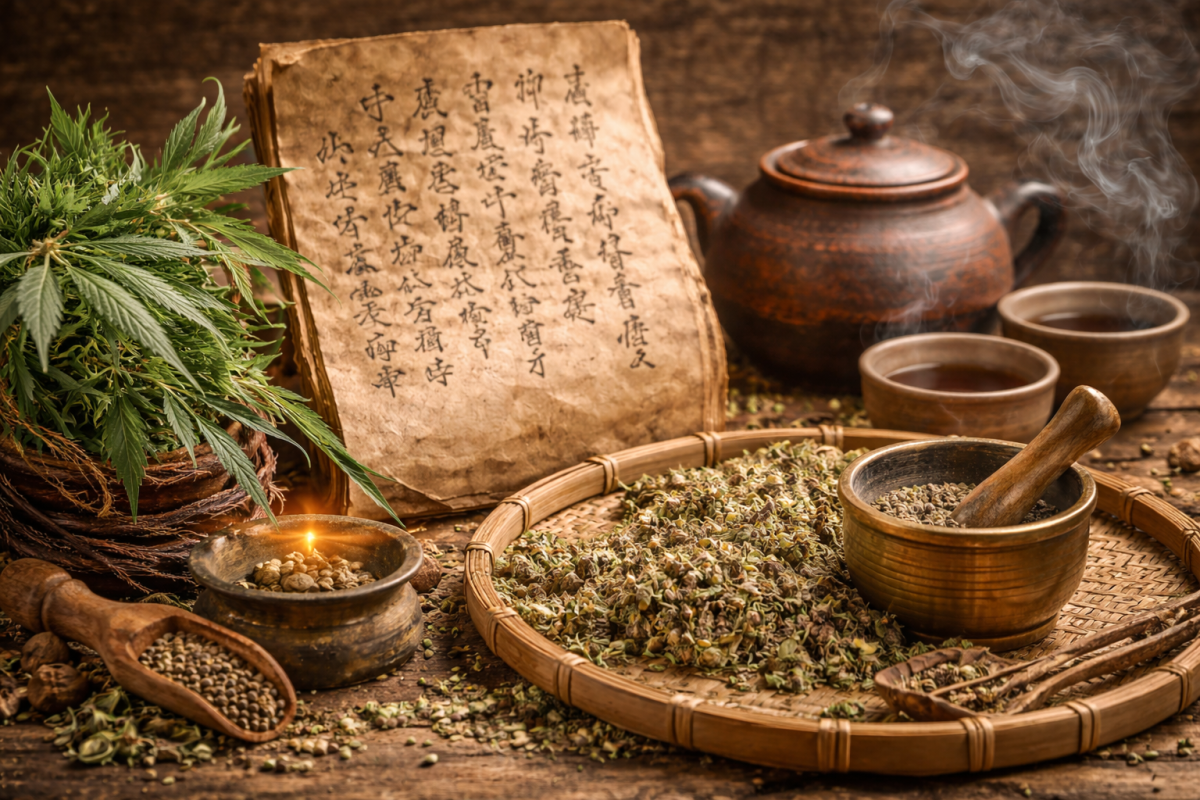
Archaeological findings suggest cultivation dates back at least 10,000 years in Central and East Asia. Hemp fibers show up in ancient pottery and textiles. That supports the idea that people first valued the plant for strength and function, not its psychoactive effects.
Seeds, fibers, and plant residue found in sites suggest routine use. Rope. Cloth. Food oils. Traditional preparations. Again, this predates any firm split between “industrial” and “psychoactive” types.
India and Middle East
Archaeological findings suggest cultivation dates back at least 10,000 years, with early evidence emerging from Central and East Asia. Hemp fibers identified in pottery and textiles suggest early value came from strength and utility, not psychoactive effects.
Seeds, fibers, and plant residue found in burial sites and settlements suggest cannabis fit into daily life. Rope. Cloth. Food oils. Traditional preparations. This was before people drew clean lines between “industrial” and “psychoactive” varieties.
Cannabis in the Classical and Medieval World
Now the story shifts into written accounts and trade.
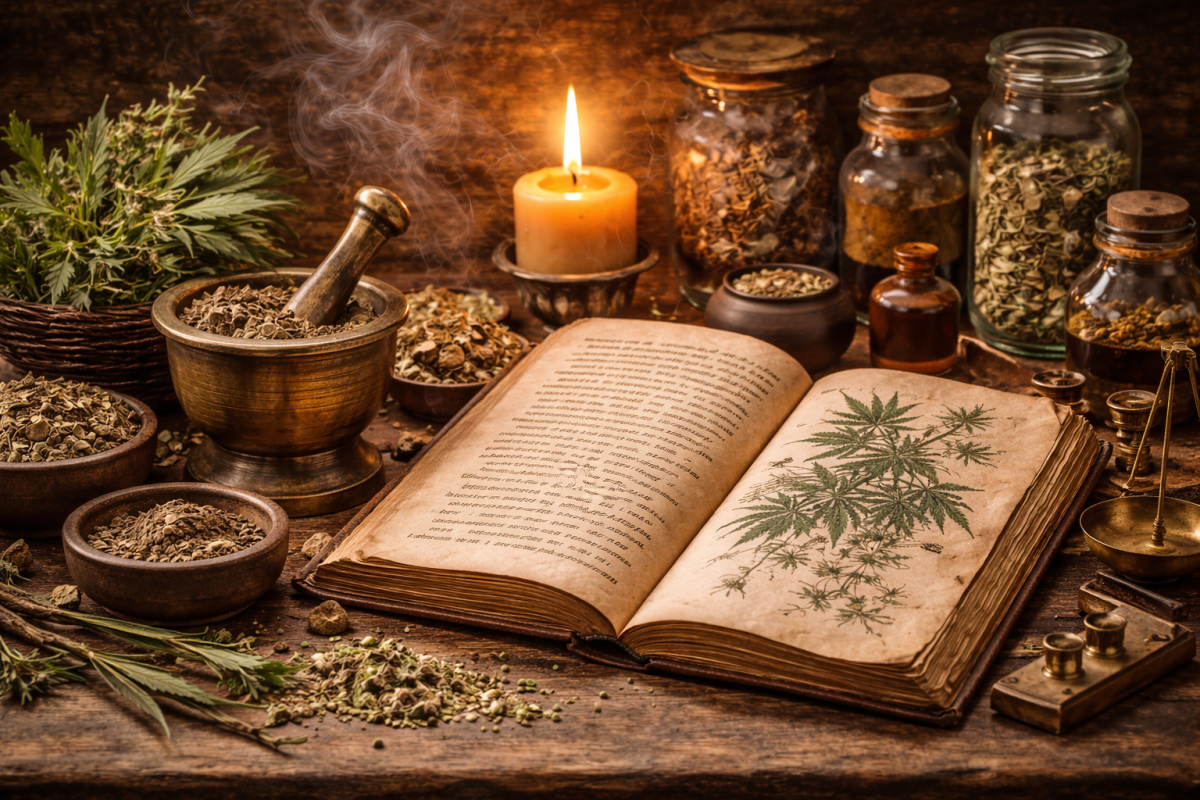
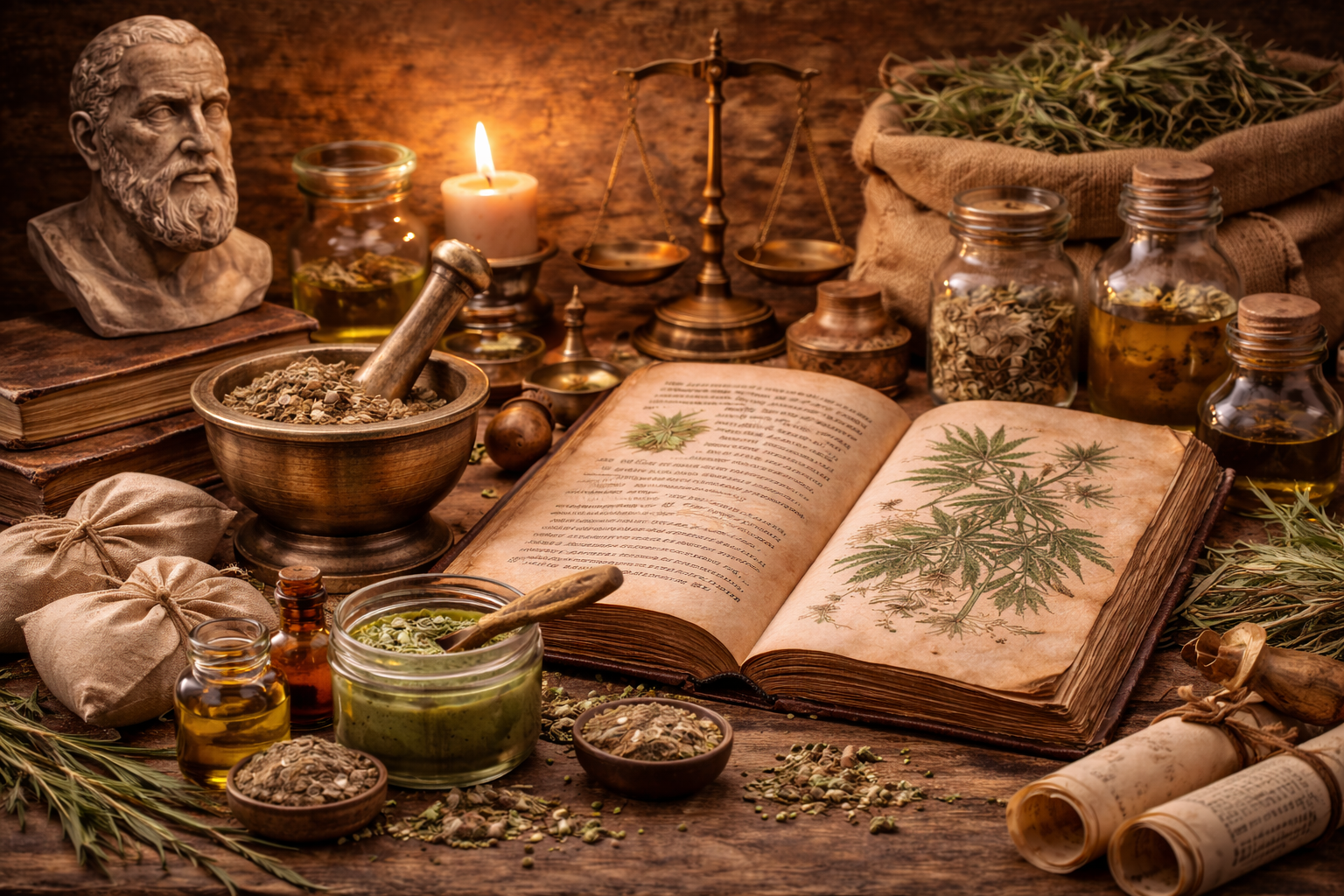
Greek and Roman writers described cannabis mainly as fiber and as salves. Medical texts from that era mention extracts used on the skin or taken by mouth for pain and inflammation. They did this without any idea of cannabinoids as separate chemical parts.
In the medieval period, cultivation spread across Europe. Demand drove it. Hemp for ships, textiles, and farm work. Psychoactive use was not the main point, and it was not treated as a special threat. It sat beside many other plant preparations of the time.
From Traditional Use to Scientific Inquiry
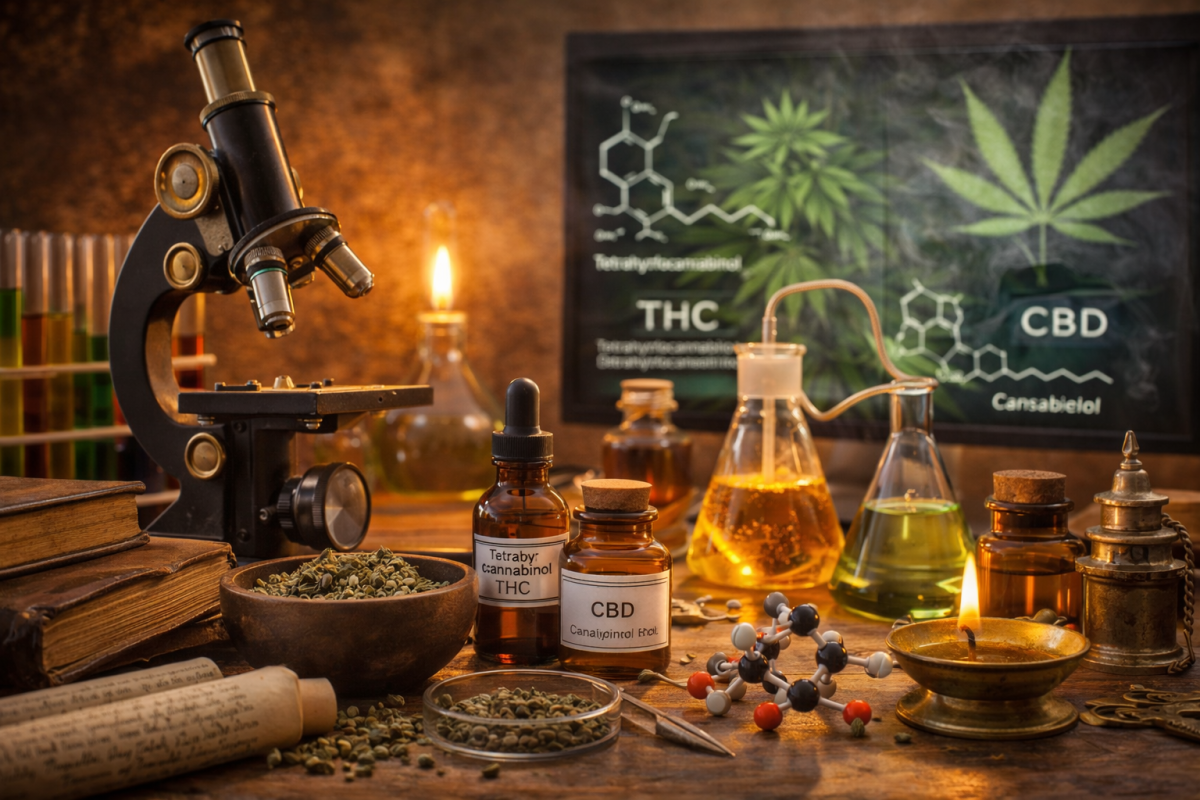
Modern scientific study came much later. It grew with 19th and 20th century chemistry and pharmacology. Researchers began isolating and naming compounds like THC and CBD. Cannabis shifted from a whole plant people used to a subject people tested.
That shift moved focus from observation to compounds. It added clarity, but also new complications. Effects once understood as “the plant does this” became numbers, debates, and rules inside modern medical systems.
Legal Shifts and Cultural Reframing
In the 20th century, many places increased regulation and criminalization, especially in the United States. Those changes disrupted research. They also reshaped how the public talked about cannabis. Traditional knowledge chains got cut, or pushed underground. In recent decades, cannabis returned to wider debate as laws changed and research restarted. Today’s conversations carry tension. Ancient use versus modern evidence. Custom versus regulation.
Why History Still Matters
Knowing this history adds context to modern talk about effects, limits, and use. It reminds us cannabis was not “invented” in a lab. It was never built for one purpose. It changed alongside people, shaped by place, preparation, and intent. That lens helps separate tradition from evidence and experience from expectation. It also sets up the next question: how cannabis interacts with the body once we study it through modern biology.
Sources & References
Clearing the Smoke on Cannabis: Medical Use of Cannabis and Cannabinoids
Justine Renard, PhD; Nitika Sanger, PhD; Robert Gabrys, PhD — Canadian Centre on Substance Use and Addiction (CCSA) | 2024
A comprehensive evidence review examining current clinical research on the medical use of cannabis and cannabinoids, outlining where evidence is strong, limited, or inconclusive across major health conditions.
Multiple Authors (Cannavubio Research Group) | 2020
A scientific overview examining the biological effects of cannabinoids on human health, including interactions with physiological systems, therapeutic potential, and current research limitations.
Therapeutic Use of Cannabis and Cannabinoids: Benefits and Risks
Xiadi Zhai; Pooja R. Sarkar; Kevin P. Hill | 2025
A comprehensive medical review evaluating the therapeutic applications of cannabis and cannabinoids, alongside associated risks, evidence strength, and clinical limitations.