THE SCIENCE OF HONEY

HONEY, THE SCIENCE BEHIND THE GOLDEN NECTAR

Now let’s look at what makes honey different

A LEGACY OF NATURE & NURTURE

Following the trail from old notes to modern labs. Long before labs and microscopes, people noticed honey held up. It didn’t spoil fast, It calmed raw skin. It helped people bounce back.

Across Egypt, Greece, China, and many Indigenous cultures, beekeeping grew into more than food. It became an early test of how nature works. No terms. No charts. Just results. People didn’t know why honey worked. They just knew it did. Today we can look closer and ask better questions. This page breaks down what research says about honey. How bees make it. What’s inside it. How it acts in the body. It also separates what evidence supports from what tradition adds.

NATURE’S BIOACTIVE SUBSTANCE

BIOACTIVE COMPOUNDS AND SYNERGISTIC EFFECTS

Honey isn’t one simple ingredient, it’s a living mix of sugars, enzymes, acids, minerals, and plant compounds. When bees turn nectar into honey, they add enzymes that shift the chemistry. When the nectar comes from many flowers, honey carries tiny plant traces too. Honey doesn’t act through one single route, its effects come from combined action. Many small parts working together. That’s why honey behaves differently than refined sugar. It’s also why results change by source, processing, and use.

THE SCIENCE BEHIND THE SUBSTANCE
Now we connect the “what” to the “how.”

THE BIOLOGY THAT MAKES HONEY WORK

This part explains the basics without the fluff. Honey affects the body through simple chemistry, enzyme action, and plant compounds.
Those basics explain why honey differs from refined sugar. They also explain why not all honey feels the same.
Source and processing matter A lot.

THE ENZYMES THAT TRANSFORM NECTAR

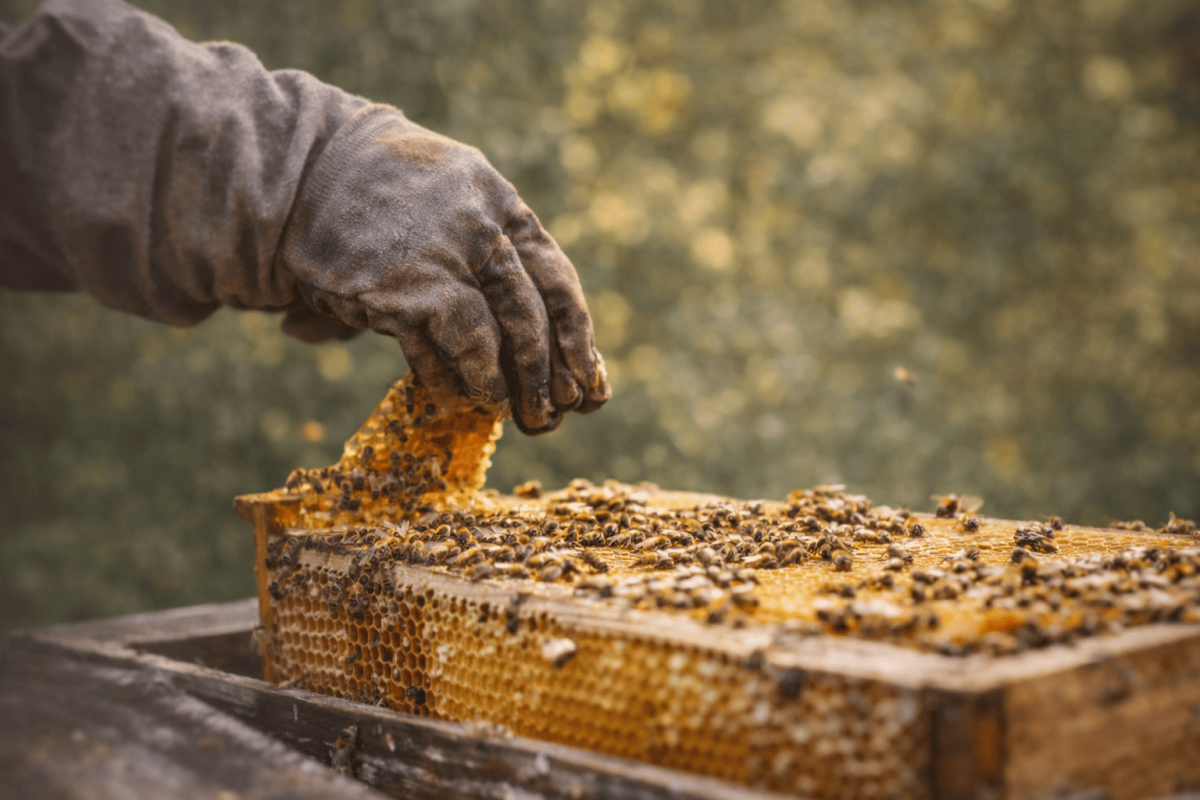
Start at the hive, because the change begins there. Honey starts as nectar, then bees make it active.
One key enzyme is glucose oxidase. It helps convert sugars and can create small amounts of hydrogen peroxide after dilution. That slow reaction helps explain why honey can limit some microbes.
It does this without acting like a harsh chemical on nearby tissue.
It’s not “magic.” It’s biochemistry.

NOT ALL SUGARS BEHAVE THE SAME

Next, we look at what your body actually digests. Honey is mostly fructose and glucose, but the mix matters.
Trace compounds matter too. Unlike refined sugar, honey includes enzymes, acids, and plant traces.
Those can affect how digestion and absorption feel. Some people report steadier energy or better tolerance than refined sweeteners.
Others don’t notice much. Individual response varies.

MORE THAN JUST HONEY

Now we bring the plants back into the picture. Honey carries trace compounds from the flowers bees visit.
That includes polyphenols and flavonoids tied to antioxidant activity. Because floral sources differ, two honeys can act differently.
Even when they look and taste similar. This diversity is one reason raw, unfiltered honeys often show stronger activity.
Processing can strip or reduce what’s there.

CONTEXT AND USE SHAPE EFFECTS

How you use it changes what it does. Honey behaves one way on its own.
It can behave differently mixed with other foods. Used on skin, it creates a different environment than when you eat it.
Timing, amount, and metabolism also shape results. For some people, effects feel subtle.
For others, they feel clearer.

WHERE SCIENCE IS STRONG & WHERE IT’S STILL EMERGING

Here’s the line between solid evidence and open questions. Evidence most strongly supports honey’s antimicrobial properties, wound support, antioxidant activity, and cough relief.
These show up in lab work and human research. Other claims are still being tested.
That includes metabolism, inflammation, and long-term disease outcomes. Responsible education means saying both things out loud.
What we know. And what we’re still studying.

WHY RESULTS AREN’T UNIVERSAL

Last, we explain why your result may not match mine. Honey changes with environment, flowers, and handling.
Heat, filtering, and storage can change enzyme activity and compound levels. So honey science avoids promises.
It focuses on conditions. Why one honey acts differently than another.
And why people can experience it differently.